What Kastraki is
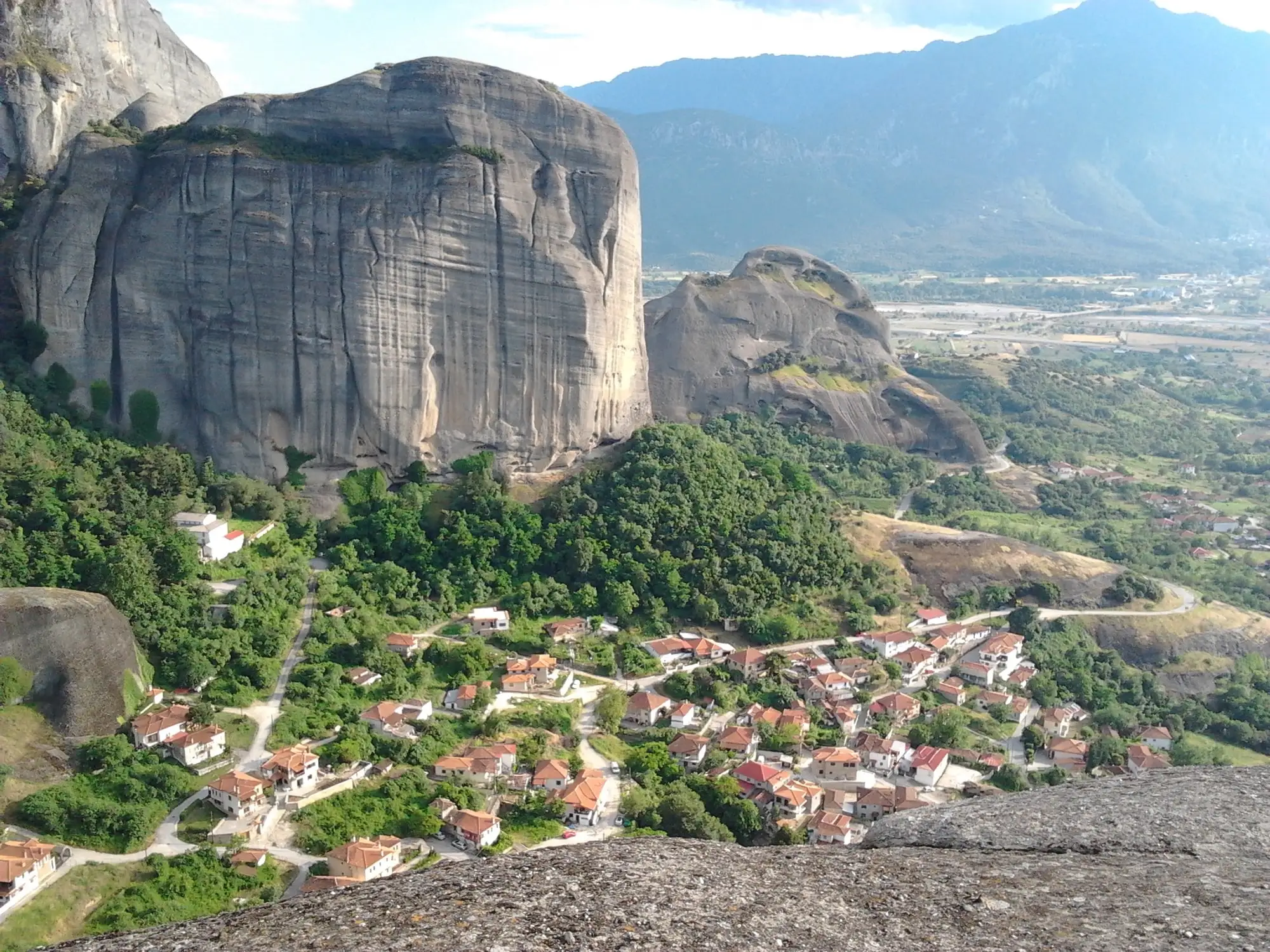
Kastraki is the village beneath Meteora’s pillars, about half an hour? on foot from Kalabaka. It occupies a valley on the western side of the rocks. Cliffs rise around the houses. The opening towards the plain lies between Holy Spirit Rock and Surloti.
The village has a central square and churches. Guesthouses and tavernas serve visitors. Paths lead out towards the monasteries and former hermit cells. Stay here if you want to begin walks from the village. Kalabaka has the railway and bus stations.
A short history
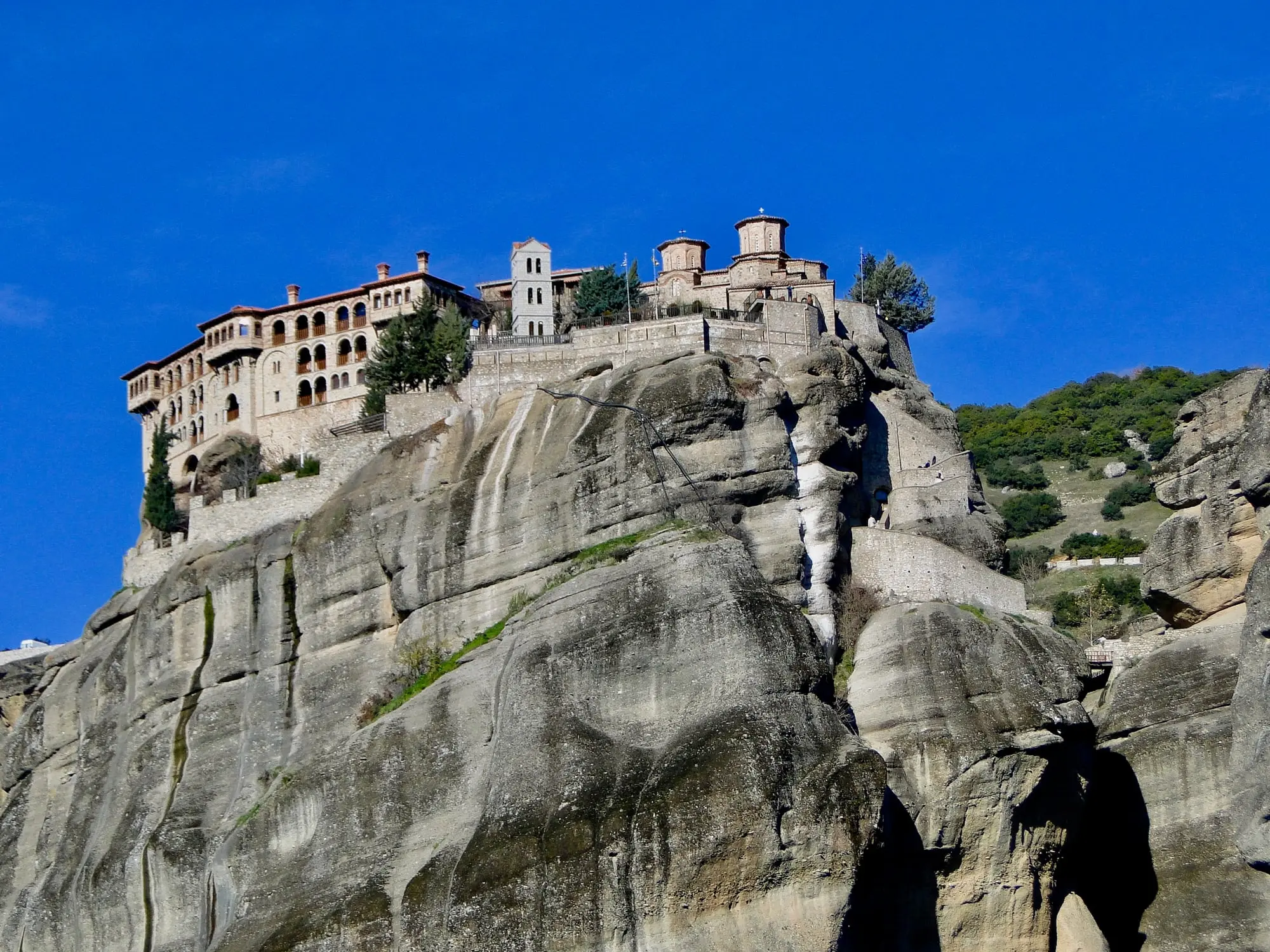
Hermits began settling among the Meteora rocks probably in the 11th century?. The chapel of Panaghia Doupiani was built at the foot of a rock in the late 12th century?. Monks had already settled there. These lower religious sites help explain the life around the cliffs before monasteries spread across the summits.
Kastraki grew from hamlets founded by refugees from Epirus during Ottoman rule. Dates for its formation range from the 16th century? to the early 1700s?. The sources disagree. Its name means “small castle” and comes from the Greek word kastro.
The village
Mesochori is Kastraki’s old centre, with houses dating from the early 20th century?. The old street plan survives. Narrow lanes pass stone houses and small courtyards. Red clay tiles cover many roofs. The old school stands by the central square beneath Holy Spirit Rock.
The village church of Agios Nikolaos has wall paintings dated 1794?. It is separate from St Nicholas Anapausas on its rock. Agios Athanasios stands near the central square. These churches sit within a village that is still inhabited.
Explore Mesochori on foot if you want to see the older buildings. Its narrow streets and uneven surfaces make walking shoes useful. Leave time for the lanes around the former square. The rock faces remain visible above the roofs.
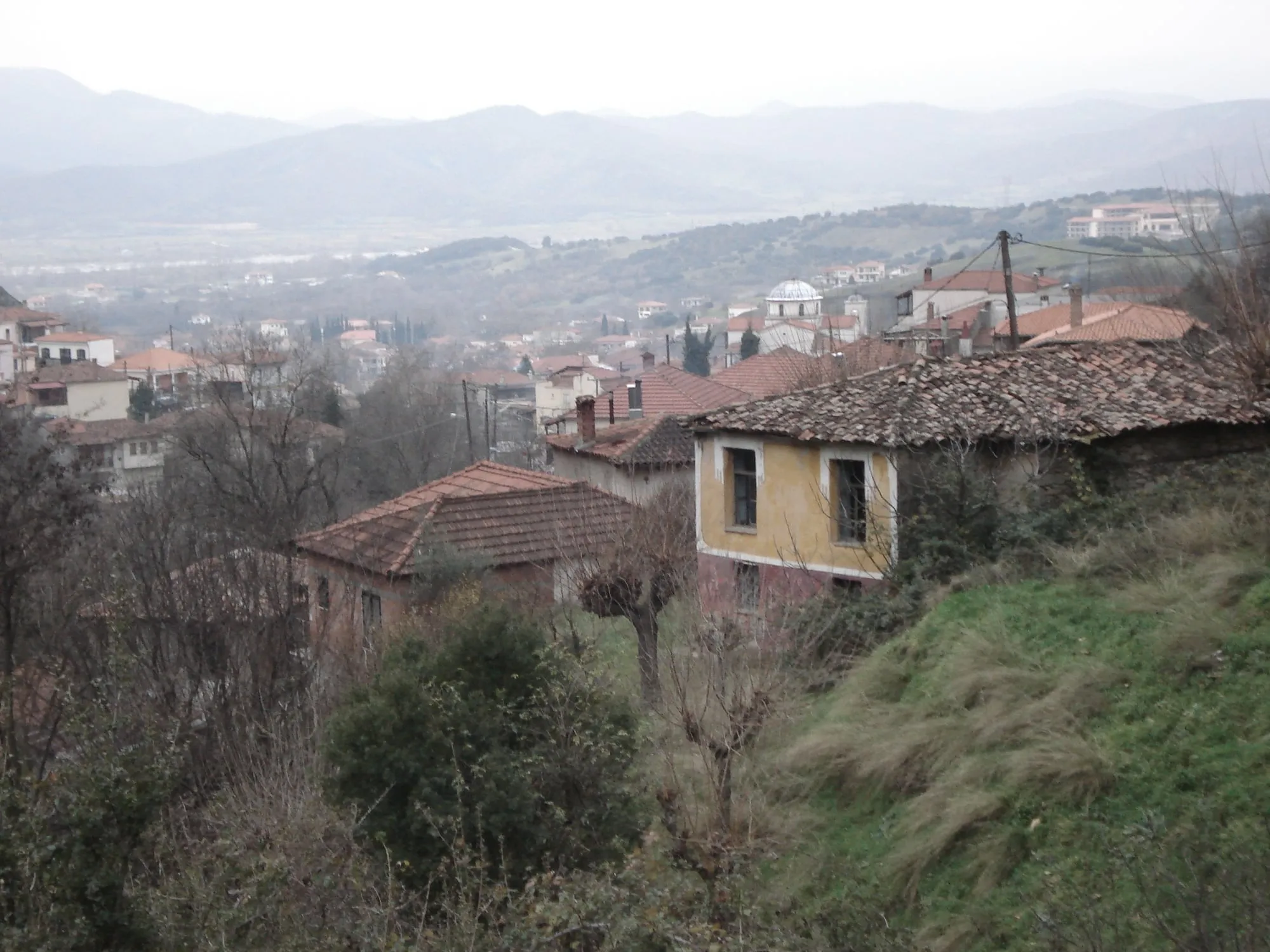 The houses of Kastraki beneath the Meteora rock faces. Photo: Wikimedia Commons, CC.
The paths from Kastraki
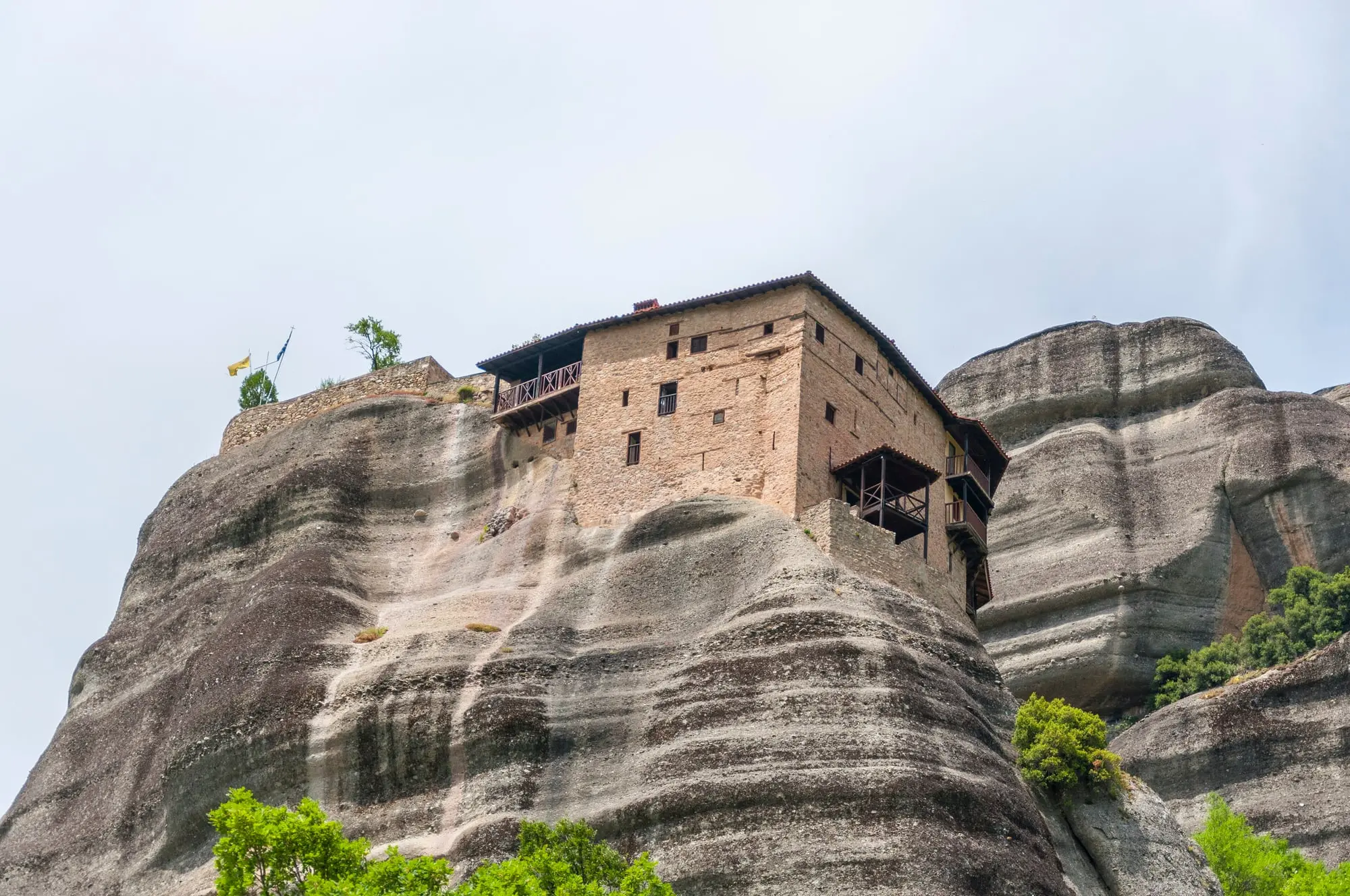
The old monks’ paths reach St Nicholas Anapausas in about half an hour?. Allow about an hour? for the Great Meteoron. These are the editor’s estimates. St Nicholas stands on the first rock along the monastery road from Kastraki. Its steps are steep. The Great Meteoron also has a long stair approach.
Badovas lies between Kastraki and Kalabaka. Former hermit cells occupy cavities in the cliffs. Remains of wooden ladders and scaffolding survive high on Pyxari. Choose this walk if the early hermit settlements interest you. The approach can be rocky and unclear in places.?
If your walk includes a monastery visit, bring cash for its entrance fee.? Shoulders must be covered. Women need a skirt below the knee. Men need long trousers. Wrap-around skirts are lent at the gates.?
How to get there
From Athens, the journey to Kalabaka takes about five to six hours? by train and replacement bus. Take the train from Larissa station to Paleofarsalos. The onward Hellenic Train bus is included in the ticket. The direct railway has been closed since the floods of September 2023?. The train from Thessaloniki also connects with the replacement bus.?
KTEL coaches from Athens Liosion station take about four and a half hours? to Trikala. Continue to Kalabaka by local bus or taxi. That leg takes about twenty minutes?. Driving from Athens takes about four hours?. Motorway tolls cost extra.
Taxis wait outside Kalabaka railway station. You can also walk from the town to Kastraki. The public bus around the monasteries was withdrawn in 2024. Plan with a taxi, the paths or a tour.?
Tours that start in Kastraki
Local monastery and sunset tours pick up in both Kastraki and Kalabaka.? Choose an option with village pickup if you are staying here. It saves travelling into town to join that departure. Check the meeting point for the option you book.
A guided hike suits you if you want help following the paths. A morning monastery tour suits a day focused on church visits. Choose a sunset route if the evening views matter most. For Badovas, look for an itinerary that includes the hermit caves. Some tours visiting Kastraki begin in Athens.
Kastraki or Kalabaka
Kastraki is about half an hour? on foot from Kalabaka. Choose it if you want quiet village streets and the rocks close above the houses. The old quarter suits an evening walk. Staying here also puts the paths out of Kastraki near the start of your day.
Kalabaka suits a stay organised around public transport. It has the railway station and bus station, plus most of the area’s hotels. If an early departure sets your schedule, staying in town avoids another transfer. A room in Kastraki means a walk or onward ride after arriving in Kalabaka.
When to go
For the widest choice of monastery visits, choose a weekend between April and October?. All six? are open on the summer weekend timetable. St Nicholas closes on Friday?. Great Meteoron closes on Tuesday? in summer. Feast days can change access. For a winter walk to a monastery, check its closing days before setting out.
Spring and autumn suit a visit focused on walking. Summer can be hot.? Early morning or late afternoon gives softer light on the village and rocks.? For the Badovas walk, avoid very hot weather and the period just after rain. The approach has uneven ground.?
Questions
Should I stay in Kastraki or Kalabaka?
Choose Kastraki if you want quiet village streets and the rocks above the houses. Kalabaka suits a stay organised around the railway and bus stations. The walk between them takes about half an hour?. Staying in Kastraki adds a walk or a ride after arriving in town.
Can I walk to the monasteries from Kastraki?
Yes. Allow about half an hour? to St Nicholas Anapausas or about an hour? to the Great Meteoron. These are editorial estimates. St Nicholas has steep steps. Choose a guided hike if you want help following the old monks’ paths.
Does Kastraki have a railway station?
No. The station is in Kalabaka. From Athens, take the train to Paleofarsalos and the connecting Hellenic Train bus to Kalabaka. The bus is included in the ticket. Taxis wait outside Kalabaka station.? If you have luggage, a taxi avoids the walk from town to Kastraki.
Do I need a car in Kastraki?
No. Old monks’ paths lead from Kastraki to the monasteries. A car suits you if you want to move between the gates without walking those paths. Parking below the monasteries is free. The car parks fill by 10:00? in season. Explore the old village on foot if its narrow lanes are your focus.
How many nights should I stay in Kastraki?
I’d choose two nights? if you want a full day for monastery visits between arrival and departure. Add time if you also want to walk the paths or explore Badovas. For a shorter stay, focus on the old village and the monastery that matters most to you.
What is there to see in Kastraki itself?
Mesochori has narrow lanes with stone houses and small courtyards. Agios Athanasios stands near the central square. The village church of Agios Nikolaos is separate from St Nicholas Anapausas monastery. If you want a walk beyond the houses, the hermit caves of Badovas lie between Kastraki and Kalabaka.
Can I visit Kastraki in winter?
Yes, if you plan monastery visits around winter closing days. St Nicholas Anapausas closes on Friday?. Check your chosen monastery’s timetable before setting out. If you want to walk to Badovas, avoid the period just after rain. The approach can be rocky and hard to follow.
Sources: Wikipedia, Kastraki, Trikala · UNESCO World Heritage Centre, Meteora · Visit Meteora, Old Habitation of Kastraki Village