Visit Delphi Meteora Monasteries Luxury Private Tour FromAthens
Operator: Yomadic.Tours & Transfers · listed in Private Meteora tours
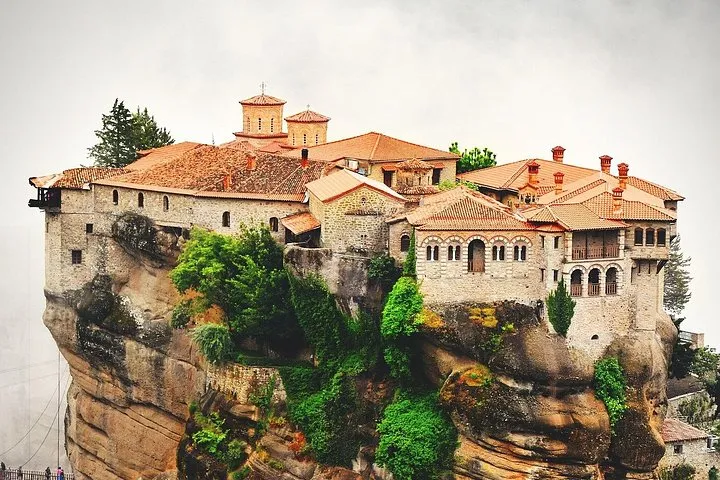
Varlaam and Rousanou each get 45 minutes when open. Delphi comes first on the 13 hours 20 min trip from Athens. Prices start at €199 per person.
Choose this if you want Delphi before the Meteora monasteries on a private day from Athens. Allow 13 hours 20 min overall. The fare starts at €199 per person.
The route covers Delphi's museum and ruins before the drive to Kalabaka. Varlaam and Rousanou each get 45 minutes when open. Thermopylae comes on the return. Lunch and entrance fees are extra.
Your English-speaking driver stays outside the sites. A licensed guide costs extra. From April to October, arrange a replacement for Rousanou on Wednesdays or Varlaam on Fridays.
Before you book
- One to three people travel by car. Four to seven use a minivan.
- Pickup includes Athens hotels, apartments or the port.
- Airport pickup costs extra.
- Give this one a miss if you have a heart condition.
- Bookings cover ages 0 to 99.
- Cancel at least 24 hours before departure for a full refund.
- Service animals allowed
- Specialized infant seats are available
- Suitable for all physical fitness levels
- Give this one a miss if you have a heart condition.
Itinerary, stop by stop
- Drive from Athens to Delphi, about two and a half hours.
- Pass Arachova.
- Pass Mount Parnassus.
- Visit the Tholos of Athena Pronaia, about 20 minutes.
- Visit Delphi's museum, about one hour.
- Visit the Temple of Apollo, about 15 minutes.
- Walk around the Delphi site, about one hour.
- Visit the Treasury of the Athenians, about 15 minutes.
- Drive from Delphi to Meteora, about two hours.
- Pass the Meteora rocks.
- Stop in Kalabaka, about one hour.
- Visit Varlaam when open, about 45 minutes.
- Visit Rousanou when open, about 45 minutes.
- See the Leonidas monument at Thermopylae, about 30 minutes.
- Drive back to Athens.
- Arachovapass by
- Mount Parnassuspass by
- Tholos of Athena Pronaia20 minentry included
- Delphi Archaeological Museum60 minentry not included
- Temple of Apollo15 minentry not included
- Delphi60 min
- Treasury of the Athenians15 minentry not included
- Meteorapass by
- Kalabaka60 min
- Varlaam Monastery45 minentry not included
- Roussanou Monastery45 minentry not included
- Thermopylae30 min
- Athens150 min
- Meteora180 min
- Delphi120 min
What the operator writes about each stop
- Arachova
Arachova
- Mount Parnassus
Mount Parnassus is a mountain in central Greece that towers above Delphi, north of the Gulf of Corinth. Mount Parnassus offers many advantages to the population of Greece. In peace, it possesses scenic views of the countryside and features olive groves and rolling hills. The mountain is also the location of historically, archaeologically, and culturally significant places of interest (such as Delphi). Recreationally, the slopes of Parnassus provide a medium for hiking (in the three warm seasons) and are skied in winter. Its melting snows provide water to the surrounding communities, reaching out as far as Athens. The mountain is composed of limestone, and its rock contains bauxite, ore that is rich in aluminum. In war, Parnassus has been a center of resistance if need be, providing cover and refuge to partisans.
- Tholos of Athena Pronaia
The tholos at the sanctuary of Athena Pronoia (Ἀθηνᾶ Πρόνοια, “Athena of forethought”) is a circular building that was constructed between 380 and 360 BC. It consisted of 20 Doric columns arranged with an exterior diameter of 14.76 meters, with 10 Corinthian columns in the interior. The Tholos is located approximately a half a mile (800 meters) from the main ruins at Delphi. Three of the Doric columns have now been restored, making it the most popular site at Delphi for tourists to take photographs. The gymnasium, which is half a mile away from the main sanctuary, was a series of buildings used by the youth of Delphi. The building consisted of two levels: a stoa on the upper level providing open space, and a palaestra, pool and baths on lower floor. These pools and baths were said to have magical powers, and imparted the ability to communicate to Apollo himself.
- Delphi Archaeological Museum
Delphi Archaeological Museum is one of the principal museums of Greece and one of the most visited. It is operated by the Greek Ministry of Culture. Founded in 1903, it has been rearranged several times and houses the discoveries made at the Panhellenic sanctuary of Delphi, which dates from the Late Helladic (Mycenean) period to the early Byzantine era.
- Temple of Apollo
The Temple of Apollo, god of music, harmony, light, healing, and oracles occupied the most important and prominent position in the Delphic Panhellenic Sanctuary. The edifice with the partially restored colonnade visible today dates to the 4th century BC; it is the third temple built at the same place. The famous oracle, the Pythia, operated inside the temple, the location chosen, according to one tradition, due to a sacred chasm beneath the site emitting vapors, which were inhaled by the Pythia. Some ancient writers state that the Pythia then entered a state of delirium and uttering inarticulate cries, which were then turned into equivocal oracles by the priests.
- Delphi
The Greeks told many stories to explain the origins of Delphi. The site was originally sacred to Gaia (also known as Ge), the ‘Mother Goddess’ whose cult centred on the Korykeon Cave, high on Mt Parnassos. After slaying a snake or she-dragon (known as Pytho) here, Apollo took the local name of Apollo Pythios. For a thousand years, pilgrims flocked to his sanctuary for guidance. The height of its fame came between the 6th and 4th centuries BCE, after the Amphictyonic League, a federation of 12 tribal states, took control of the sanctuary following the First Sacred War (595–586 BCE). As an autonomous state, Delphi earned great prosperity from benefactors including the kings of Lydia and Egypt, and the Roman emperor Hadrian. Nominally neutral, it was a locus of political power.
- Treasury of the Athenians
Treasury of the Athenians built to commemorate victory at Battle of Marathon From the entrance of the upper site, continuing up the slope on the Sacred Way almost to the Temple of Apollo, are a large number of votive statues, and numerous so-called “treasuries.” These were built by many of the Greek city-states to commemorate victories and to thank the oracle for her advice which was thought to have contributed to those victories. These buildings held the offerings made to Apollo; these were frequently a “tithe” or tenth of the spoils of a battle. The most impressive is the now-restored Athenian Treasury, built to commemorate their victory at the Battle of Marathon in 490 BC. The Siphnian Treasury was dedicated by the city of Siphnos whose citizens gave a tithe of the yield from their silver mines until the mines came to an abrupt end when the sea flooded them. One of the largest of the treasuries was that of Argos
- Meteora
In this tour we will visit Meteora, a unique location full both in terms of landscape and christian faith.
- Kalabaka
Kalabaka is a town and seat of the municipality of Meteora in the Trikala regional unit, part of Thessaly in Greece. The population was 12,000 at the 2011 census, of which 8,330 in the town proper. The Meteora monasteries are located near the town.
- Varlaam Monastery
tour of Osios Varlaam Monastery
- Roussanou Monastery
tour of the Rousanou Monastery at Meteora
- Thermopylae
As we leave the magnificent Meteora behind us, let us not overlook the Battle of Thermopylae of 480 BCE, which has long been the topic of cultural motivation, as it is perhaps the most famous military last stand of all time. The monument of the Great Leonidas, King of Sparta, in Thermopylae, will grace our path on our way back to Athens in the late afternoon.
- Athens
After meeting our guide, your transfer to the archeological site of Delphi will begin for a total duration of 2 hours and 30 minutes.
- Meteora
As soon as you have completed your visit to the monasteries, you will start your Return to Athens total duration 3 hours 30 minutes
- Delphi
After you finish your guided tour of the archaeological site of Delphi, you will start a trip to Meteora, lasting 2 hours
Included
- Pick-up and drop-off service: Athens Hotel, Airbnb residence or Port
- Groups of 1- 3people are transported in luxurious sedan vehicles.
- Transportation via modern, first-class private vehicle
- Expert English-speaking Tour Drivers with extensive historical knowledge
- All vehicles with WiFi, A/C, Bottled Water
- Fully Private Tour
- Groups of 4-7 people are transported in comfortable mini vans.
- Only Leaders Passport number requested to fill the voucher for the pick up...
Paid separately
- Kindly note that gratuities and tips are not included in the price and are left to your discretion.
- Meal in Arachova - Lunch stops are scheduled, but meal costs are not included
- Licensed guide to accompany you into archaeological sites
- Optional airport pick-up, available at an additional cost.
- Admission fees
- Admission fees
Meeting point, pickup and return
Hotel pickup included, departure at 06:30 or 06:45 or 07:00 or 07:15 or 07:30 or 07:45 or 08:00 or 08:15 or 08:30. Pickup 20 minutes before departure. 522 pickup points listed.
Welcome & Meeting Instructions We are delighted to welcome you to Athens and look forward to offering you a truly exceptional experience. Your personal driver will meet you with a warm smile and a sign displaying your name for easy recognition. Please follow the instructions below based on your arrival point: • Hotel Pickup: Your driver will be waiting for you inside the hotel lobby, near the reception area, ready to assist you with anything you may need before departure. • Airport Arrival: After collecting your luggage, please make your way to the Arrivals Hall. Your driver will be standing by the exit doors, holding a personalized name sign, prepared to escort you comfortably to your vehicle. • Cruise Port (Piraeus) Arrival: Once you disembark, follow the signs to the Cruise Terminal Exit. Your driver will greet you just outside the terminal, holding a clearly marked sign with your name and ready to welcome you aboard. ***Confirmation will be received at time of booking ***Our drivers are not official tour guides, but they are knowledgeable and can provide fascinating commentary in fluent English. Although they will not enter the archaeological sites with you, they can answer all of your questions about the places you visit with this tour.Please keep your phone switched on so your driver can reach you if necessary. If you have any difficulties locating them, feel free to contact us immediately — we are always here to assist you. We look forward to providing you with a relaxing, memorable, and luxurious tour experience.
Schedule and cancellation
Usual timetable: daily, at 06:30, 06:45, 07:00, 07:15, 07:30, 07:45, 08:00, 08:15, 08:30. Check your date when you book.
For a full refund, cancel at least 24 hours before the scheduled departure time.
- 100% refund when cancelled 1 day or more before departure
- 0% refund when cancelled less than 1 day before departure
Cancelled for bad weather: another date or a full refund.
Ratings by source
| Source | Average | Reviews |
|---|---|---|
| Viator | 5.0 | 4 |
| Tripadvisor | 5.0 | 9 |
We use the Viator figures to select tours and never quote reviews.
From the operator
In Yomadic.Tours & Transfers's own words, from the listing.
Explore the UNESCO World Heritage Site at Delphi, home of the 4th-century-BC Temple of Apollo on this private, full day excursion from Athens. Travel in private, air-conditioned vehicles and get around all the sites your group is interested in visiting within the extensive mountainside archaeological complex before returning comfortably to Athens.
The pan-Hellenic sanctuary of Delphi, where the oracle of Apollo features, was the site of the omphalos, the 'navel of the world'. Blending harmoniously with the superb landscape and charged with sacred meaning, Delphi in the 6th century B.C. was indeed the religious centre and symbol of unity of the Ancient Greek World
Give us the chance to make this icon live and feel together the fundamentals of our culture.
Trust the locals!!!
From the early Christian times, the Meteora vertical cliffs were regarded as the perfect place to achieve absolute isolation, to discover peace and harmony and, thus, to support man’s .
Other tours in Private Meteora tours
The rest of the selection, in the order of the comparison.
 Choice 1 · Theodores Private Tours · Theodores Travel
Athens, Meteora, Delphi and dinner
From €160 per adult · 14 hours · private
The Athens circuit with dinner
 Choice 2 · My Athens Transfers
Athens, monastery visits and lunch
From €138.50 per adult · 12 to 14 hours · private
The Athens day with lunch
 Choice 3 · Visit Meteora
Six hours, your own route
From €62.50 per adult · 6 hours · private
Six local hours to shape
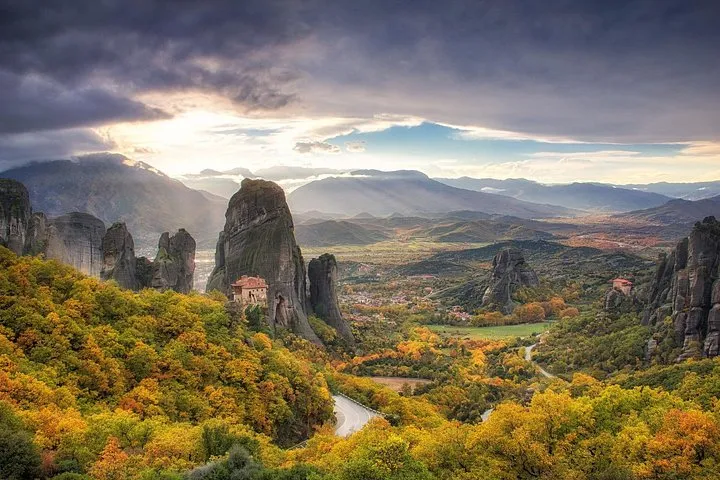 Choice 4 · Visit Meteora
Local pickup, two monasteries inside
From €60 per adult · 4 hours · private
Four hours with two inside
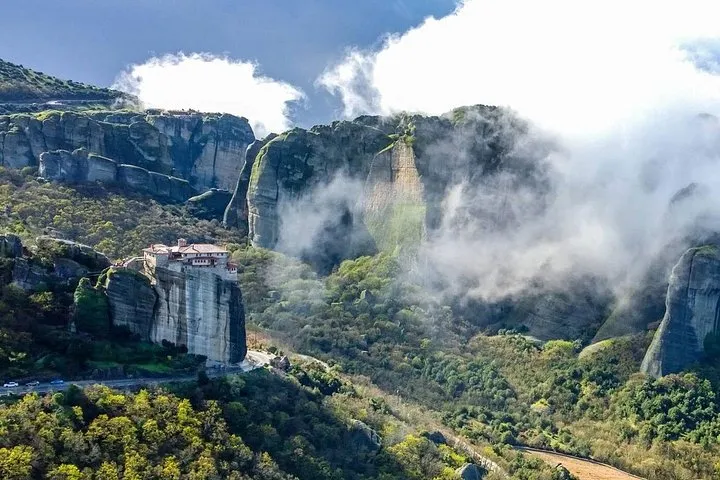 Choice 5 · Meteora Thrones · Travel Center
Local car, your monastery choices
From €200 per group · 4 to 6 hours · private
The local car priced for two
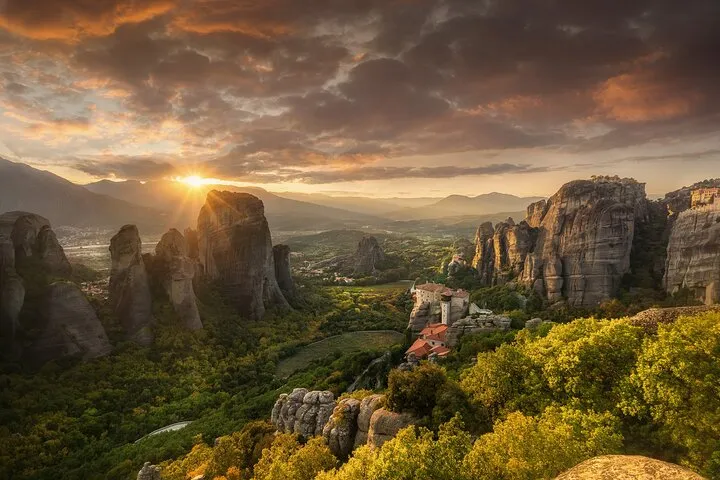 Choice 6 · Meteora Photo Tour
Sunset photos, all monasteries outside
From €115 per adult · 4 hours · private
Sunset for your own camera
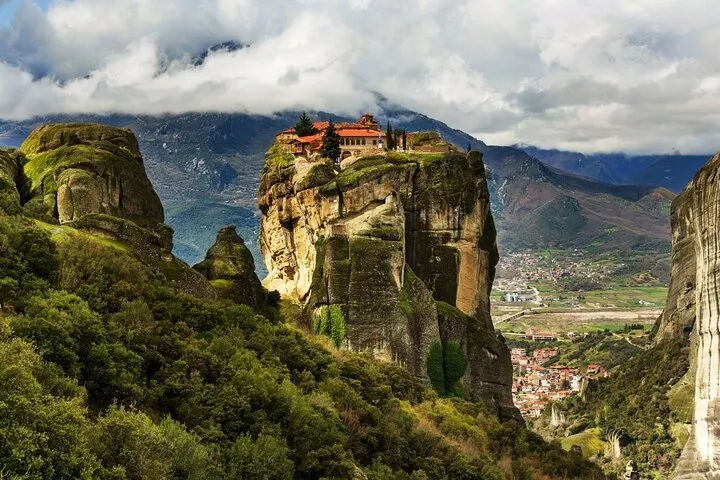 Choice 7 · LS Tours
Athens, three monasteries and Thermopylae
From €110 per adult · 13 hours · private
The Athens day with three inside
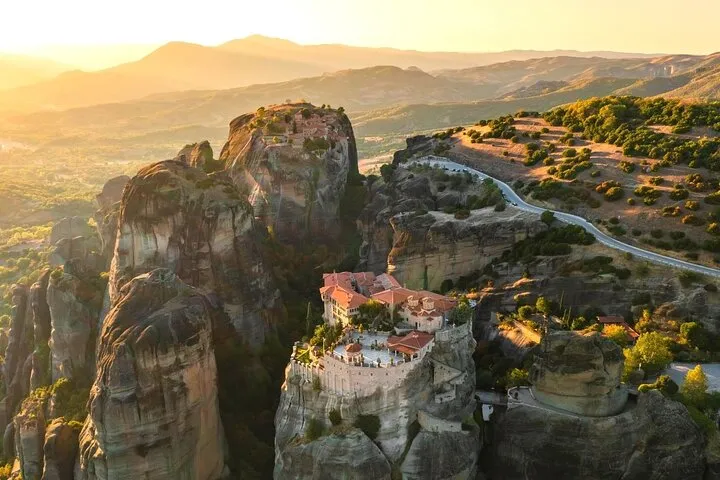 Choice 9 · Meteora Trip
Private sunset, one monastery inside
From €200 per group · 4 hours · private
The sunset van priced for three
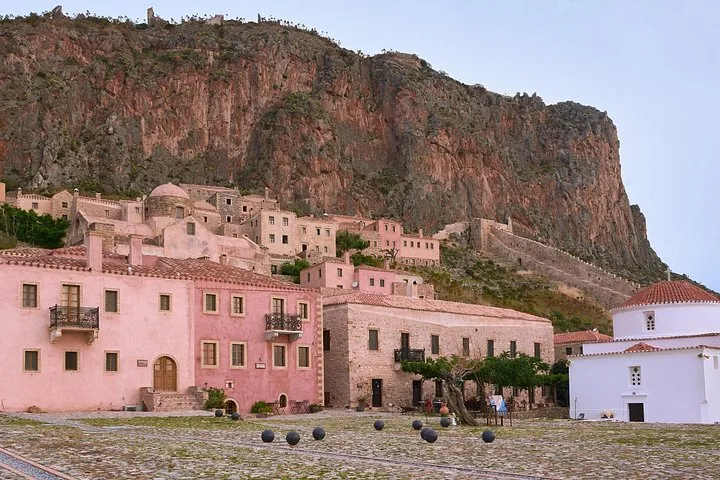 A week through the Peloponnese · EUDAIMONIA Tours & Experiences
A week through the Peloponnese
From €2417.94 per adult · 168 hours · private
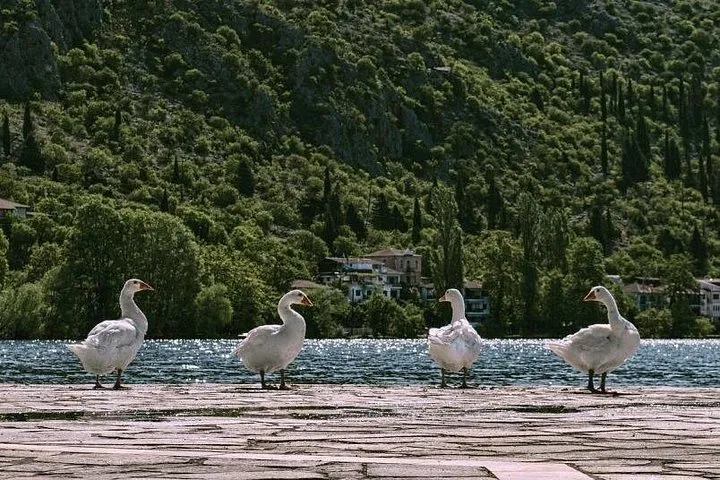 Seven days through northern Greece · Private Tours Greece
Seven days through northern Greece
From €1438.24 per adult · 168 hours · private